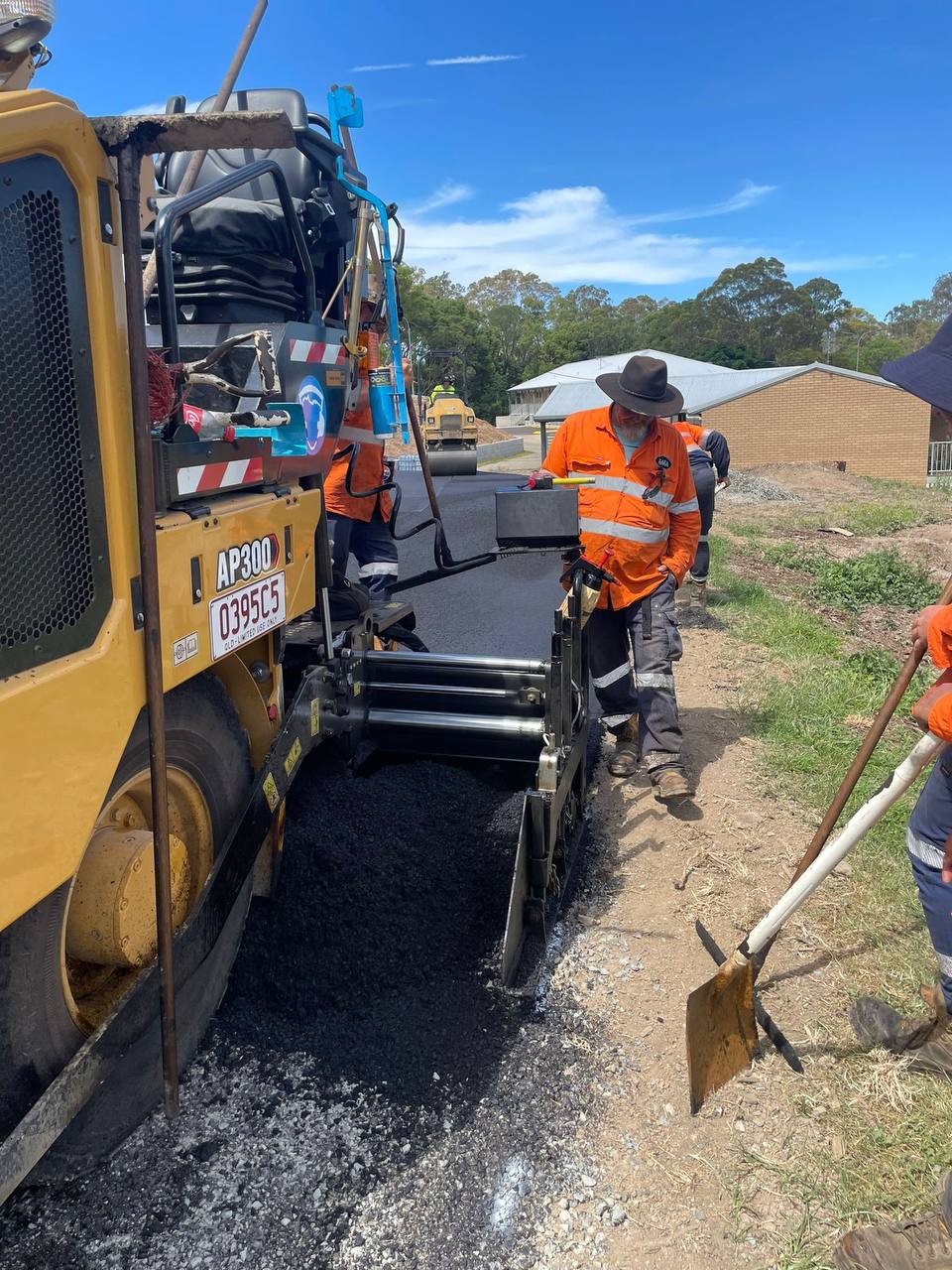
Surfaces that regularly carry heavy vehicles need to withstand considerably more stress than areas used primarily by passenger cars. Trucks, commercial vehicles, machinery and other heavy traffic place repeated loads on the pavement, particularly around entrances, turning areas, loading zones and locations where vehicles remain stationary.
Asphalt can provide a strong and dependable surface for these conditions, but the asphalt layer alone does not determine how well the pavement performs. For properties and commercial sites in Ocean Shores, NSW, the quality of the foundation, pavement design, drainage, asphalt specification and installation all contribute to long-term strength.
At Ocean Shores Surfacing Solutions, we approach asphalt and bitumen resurfacing with the complete pavement structure in mind, ensuring the surface is suited to the demands placed upon it.
Why Heavy Vehicles Place Greater Demands on Pavement
Every vehicle transfers its weight through its tyres and into the pavement below. Heavier vehicles create greater loads, while repeated movements place ongoing stress on the same sections of pavement.
The demands can become particularly concentrated where vehicles:
- Brake regularly
- Accelerate from a stationary position
- Make tight turns
- Follow the same wheel paths
- Park for extended periods
- Enter and exit frequently
A surface that has not been constructed for these conditions may eventually develop rutting, cracking, depressions or other forms of deterioration.
How Asphalt Supports Heavy Vehicle Traffic
Asphalt is widely used for vehicle areas because it combines strength with a degree of flexibility. Rather than behaving as an entirely rigid surface, a correctly designed asphalt pavement can accommodate normal stresses while distributing vehicle loads through the layers underneath.
When installed over a suitable foundation, asphalt provides a continuous surface that can improve stability and usability compared with loose, uneven or deteriorated ground.
The Foundation Is Just as Important as the Asphalt
Installing asphalt over a weak foundation does not automatically create a strong pavement.
The layers beneath the surface need to provide adequate support for the traffic expected to use the area. If the base moves, settles or loses strength, the asphalt above can eventually reflect those weaknesses.
Proper preparation may involve:
- Assessing existing ground conditions
- Removing unsuitable material where necessary
- Establishing appropriate pavement levels
- Installing suitable base materials
- Compacting each layer correctly
- Preparing the surface for effective drainage
This preparation gives the asphalt a stable platform on which to perform.
Pavement Thickness Should Match Its Intended Use
Not every asphalt surface should be constructed in exactly the same way. An area regularly carrying heavier commercial vehicles may require a different pavement structure from one designed primarily for lighter traffic.
The appropriate design depends on factors including:
- Vehicle types
- Traffic frequency
- Expected loads
- Existing ground conditions
- Intended use of the area
- Condition of the supporting pavement
Assessing these requirements before surfacing helps ensure the pavement is suitable for the work it will actually be expected to perform.
Correct Compaction Improves Pavement Stability
Compaction is critical throughout pavement construction. Base materials need to be compacted properly, and the asphalt itself must also achieve suitable density during installation.
Effective compaction helps create a stable pavement with consistent support.
Poor or inconsistent compaction can contribute to:
- Localised settlement
- Surface depressions
- Rutting
- Premature cracking
- Uneven pavement performance
For areas carrying heavy vehicles, these weaknesses can become particularly noticeable because of the greater loads placed on the surface.
Turning Areas Need Careful Attention
Heavy vehicles do not only apply downward pressure. Steering while moving slowly or turning tightly can create additional forces at the tyre and pavement interface.
Entrances, loading areas and turning points can therefore experience different stresses from straight sections of an access road.
These traffic patterns should be considered when planning the pavement rather than assuming every part of the site will experience identical conditions.
Drainage Helps Protect the Pavement Structure
Even a well-constructed heavy-duty pavement can deteriorate if water is allowed to weaken its supporting layers.
Cracks, damaged edges and poorly drained areas can allow moisture to reach the pavement foundation. If the base becomes unstable, it may no longer distribute heavy vehicle loads effectively.
Professional grading helps establish appropriate falls so water moves away from the pavement instead of remaining in depressions.
Good drainage can help reduce the likelihood of:
- Water pooling
- Base weakening
- Pothole formation
- Localised sinking
- Edge deterioration
Managing water is therefore an essential part of protecting a surface that carries regular heavy traffic.
Why Does Rutting Develop Under Heavy Vehicles?
Rutting appears as depressions along regular wheel paths. It can develop when parts of the pavement deform under repeated loading.
Several factors may contribute, including insufficient pavement strength, weak supporting layers, poor compaction or deterioration beneath the asphalt.
When rutting becomes noticeable, simply applying material to the depression may not resolve the cause. The condition of the pavement underneath should be assessed to determine why movement is occurring.
Can Existing Surfaces Be Strengthened Through Resurfacing?
In some situations, an existing pavement can benefit from asphalt resurfacing rather than complete reconstruction.
This is most appropriate where the supporting pavement remains suitable but the upper surface has become worn or deteriorated.
Before resurfacing, it is important to investigate problems such as:
- Structural cracking
- Repeated potholes
- Significant rutting
- Unstable sections
- Drainage issues
- Localised settlement
Where these problems originate beneath the existing surface, the affected areas may require preparation or repair before new asphalt is installed.
Signs a Heavy-Traffic Surface Needs Attention
Surfaces carrying heavy vehicles should be monitored for changes that may indicate developing pavement problems.
Warning signs include:
- Wheel-path depressions
- Cracking around turning areas
- Potholes that repeatedly return
- Sunken parking or loading areas
- Broken pavement edges
- Water collecting in ruts
- Surface movement under traffic
Early assessment can help identify whether deterioration remains localised or is affecting the wider pavement structure.
Asphalt Can Create a More Practical Working Surface
Strength is not the only advantage of asphalt for heavy-vehicle areas. A professionally installed surface can also improve how the site functions from day to day.
A smooth, consistent pavement can provide:
- More predictable vehicle movement
- Improved access to loading or operational areas
- Reduced loose material
- Fewer uneven sections
- A cleaner, more defined traffic surface
For commercial and operational properties in Ocean Shores, NSW, these practical benefits can be just as important as pavement durability.
Why Professional Installation Matters
Asphalt itself cannot compensate for inadequate pavement preparation. Long-term performance comes from treating the base, drainage and surface as parts of one complete system.
At Ocean Shores Surfacing Solutions, we assess asphalt and bitumen resurfacing projects in Ocean Shores, NSW, according to existing pavement conditions and the traffic the surface is expected to carry. This allows preparation and surfacing work to be matched to the actual requirements of the site rather than applying the same approach to every project.
Conclusion
Asphalt can provide a strong, stable and practical surface for areas that regularly carry heavy vehicles, provided the complete pavement is designed and prepared for those demands.
A stable road base, suitable pavement construction, thorough compaction, effective drainage and professional asphalt installation all contribute to long-term performance. Where an existing surface already shows rutting, recurring potholes or significant settlement, identifying the underlying cause is equally important before resurfacing takes place.
For property owners and businesses in Ocean Shores, NSW, Ocean Shores Surfacing Solutions provides professional asphalt and bitumen resurfacing tailored to the condition and intended use of each site. If your existing surface carries regular heavy traffic and is beginning to show signs of deterioration, contact our team to arrange an assessment and determine the most appropriate surfacing approach.
Call us on: 07 3113 9392
Click here to find out more about Ocean Shores Surfacing Solutions
Click here to complete our contact form and see how we can help with your driveway needs.